Sunflower Bouquet Engraving SVG
A Vintage-Inspired Design That Feels Hand-Drawn—Not Digitally Stiff
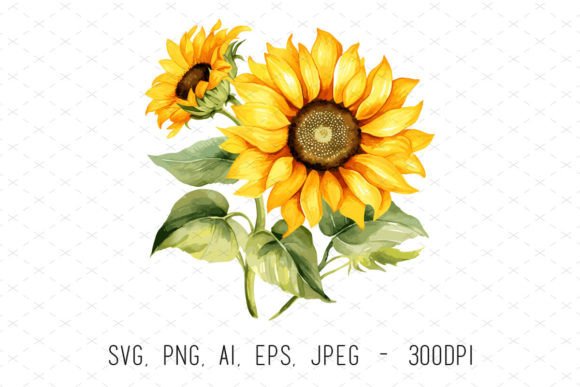
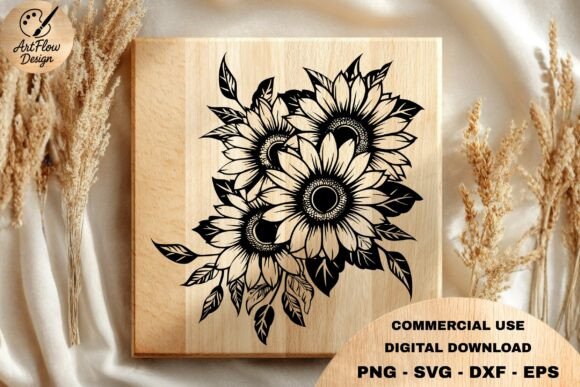
First impression? This Sunflower Bouquet Engraving SVG lands with quiet confidence—not loud, not trendy, but deeply intentional. The vintage engraving style gives it warmth and authenticity, like something pulled from a 19th-century botanical journal. There’s rhythm in the stems, weight in the seed heads, and subtle variation in line thickness that suggests craftsmanship, not automation. As an embroidery designer who’s stitched hundreds of floral motifs, I immediately sensed this wouldn’t read as “clip art” on fabric—it has presence. It’s not overly fussy, yet detailed enough to reward close looking: veins in the leaves, layered petals, gentle curvature in the blooms. That balance makes it unusually versatile across product types.
Where It Shines: Real Projects, Real Customers
Last week, I prepped a custom embroidered tote bag for a local florist’s pop-up shop—and Sunflower Bouquet Engraving SVG was my top candidate. Why? Because it held up beautifully at 4.5 inches wide on natural canvas: clear, legible, and richly textured in stitch. On sweatshirts, it softened just right—no harsh edges, no lost detail—thanks to those clean, high-contrast lines translating well into satin and fill stitch. I also tested it on a linen tea towel (light stabilizer, 60-weight thread), and the fine lines stayed crisp without bleeding or shadowing. For baby embroidery, I scaled it down to 3 inches on a cotton onesie—still readable, still charming, with no fragile stems snapping in the hoop. And yes, it worked as an embroidered patch: clean outer edge, balanced negative space, and no internal stitching chaos.
This design naturally elevates handmade product perception. When customers see that kind of deliberate linework on a boutique apron or a holiday kitchen towel, they don’t think “machine-made”—they think “curated,” “thoughtful,” “made with care.” That quietly boosts perceived value and trust, especially for Etsy sellers or small shop owners building brand consistency through cohesive, non-generic design assets.
Where to Pause—and Test First
Don’t assume it’s foolproof on every surface. On highly textured fabrics like bouclé or thick terry cloth, some of the finer leaf details can blur or disappear mid-stitch unless you adjust stabilizer layers (medium cutaway + tear-away combo helped me). On stretchy knits—say, a lightweight crewneck—the outer curves of the bouquet need careful hooping and possibly reduced stitch density to avoid puckering. And while the high-contrast lines help on dark fabric, I’d still test thread colors thoroughly: a warm gold or deep olive often reads richer than stark black on charcoal heather.
It’s not ideal for tiny hoops under 3 inches without simplification—those delicate sunflower centers and thin stem junctions risk becoming indistinct or over-stitched. Likewise, avoid placing it directly over seams, darts, or curved cap crowns without repositioning or slight scaling; the composition assumes a flat, stable surface. If you’re planning holiday embroidery on quilted stockings or layered baby blankets, check how the design handles dense fill areas—some versions of engraving-style files pack more stitches than expected in shaded sections.
Practical Notes Every Embroidery Designer Should Run Through
- Always stitch a test on scrap fabric—same fiber, same stabilizer, same thread count—as your final project.
- Review stitch density before loading: if the file feels heavy in the center blooms, consider lightening fill stitch % by 5–10% for breathable fabrics.
- Confirm hoop size compatibility early—this design works best in 4x4 or larger, but verify spacing if combining with text or borders.
- Inspect small details at actual stitch-out size: do leaf tips vanish? Do inner petal lines merge? Zoom in on your embroidery software preview.
- Test black-and-white mockups first—especially for digital product previews or Etsy listings—to confirm contrast and readability.
- Compare performance on light vs. dark fabric backgrounds using real thread samples, not just screen previews.
- Use proper stabilizer: medium cutaway for knits, tear-away for stable wovens, and fusible + tear-away for lightweight linens.
- Verify licensing terms before selling finished items or bundling Sunflower Bouquet Engraving SVG into digital embroidery kits—it’s listed as Graphics, so commercial use may require confirmation.
More Than Just an Illustration—It’s a Quiet Brand Builder
I’ve used Sunflower Bouquet Engraving SVG across three distinct craft business contexts this season: a limited-run set of personalized pillow covers for a wedding client, a small-batch line of embroidered kitchen towels for a local maker market, and as part of a printable mockup bundle for fellow Etsy sellers launching new embroidery files. In each case, it performed consistently—not flashy, but reliable, elegant, and unmistakably hand-informed. That matters when you're curating design assets for long-term use. It doesn’t shout. It invites. And that’s rare in today’s oversaturated embroidery landscape.
For apparel decorators, it adds sophistication without complexity. For hobbyists, it stitches cleanly without advanced digitizing knowledge. For creative entrepreneurs building recognizable visual language, it slots seamlessly into botanical, rustic, or heritage-themed collections—whether paired with script fonts or minimalist sans-serifs. It’s not just another floral SVG. It’s a design with intention, restraint, and quiet versatility.
Final Thought: Choose It When You Want Timelessness Over Trend
If your goal is fast-turnaround, viral-style embroidery, this might feel too considered. But if you’re designing for keepsakes, heirloom-adjacent items, or products where craftsmanship is part of the story—then Sunflower Bouquet Engraving SVG earns its place. It’s the kind of Illustrations asset that grows more valuable the longer you own it, because its vintage engraving style won’t date, and its balanced composition adapts without begging for edits. Stitch it thoughtfully, pair it with quality materials, and let the design speak for itself—just as it should.