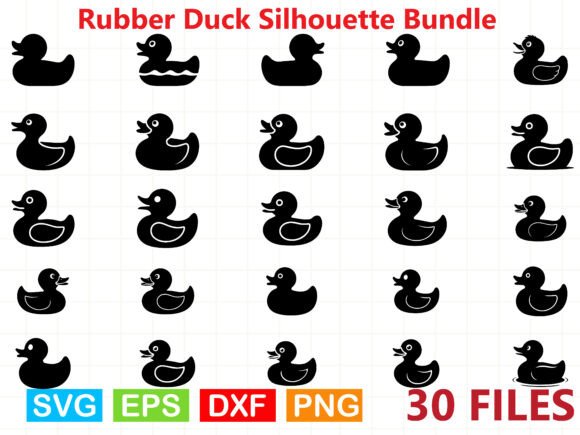
Rubber Duck Silhouette Bundle, Duck SVG
As a designer who’s stitched hundreds of custom pieces—from boutique baby onesies to Etsy-ready embroidered patches—I opened the Rubber Duck Silhouette Bundle, Duck SVG expecting charm, not complexity. What I found was a clean, confident silhouette: minimal but expressive, playful without tipping into cutesy overload. It’s not a cartoon duck with googly eyes or water ripples—it’s a single, smooth outline that reads instantly at 2 inches wide *and* holds up when scaled to 5 inches on a tote bag. That duality matters—especially if you’re building a cohesive line of nursery decor or launching a small shop product with consistent visual language.
A real test: stitching it onto a linen tea towel for a baby shower gift
I pulled this design for a client-requested set of kitchen linens—specifically, a 4-inch embroidered duck on a natural linen tea towel. Why that combo? Linen’s slub texture and low stretch demand clarity in stitch placement, and tea towels get washed weekly. The Rubber Duck Silhouette Bundle, Duck SVG translated cleanly into my embroidery software with no jagged edges or unintended anchor points. No redrawing needed. I used a satin stitch border (3mm width) with a light fill stitch inside—not dense enough to stiffen the fabric, just enough to define shape. On linen, it landed softly: recognisable, tactile, and quietly joyful. Customers don’t buy “a duck.” They buy nostalgia, warmth, and handmade intention—and this design delivers that without shouting.
Where it shines—and where it needs thoughtful handling
The Rubber Duck Silhouette Bundle, Duck SVG is strongest when used as a standalone emblem: think embroidered patch on a denim jacket, minimalist sweatshirt embroidery for a baby boutique, or a single motif on a cotton apron. Its simplicity makes it scale-friendly across apparel, home goods, and personalized gifts. As an embroidery file, it avoids over-engineered details—no tiny beak textures or feather gradients—so stitch density stays balanced, thread tension stays predictable, and hoop size stays manageable (I ran it smoothly in a 4×4 hoop).
But simplicity isn’t license for autopilot. On stretchy fabrics like jersey or ribbed knit, that smooth curve can distort if stabilizer choice is light. I recommend medium-weight cutaway for t-shirts or onesies—especially if pairing with other motifs later. On dark fabric, test thread colors first: a soft ecru or pale yellow reads friendlier than stark white, which can look clinical against charcoal or navy. And avoid placing it near seams or curved surfaces (like cap brims) unless you’ve confirmed the design’s proportions hold under tension—its longest axis is horizontal, so rotating it vertically on a curved surface may compress the silhouette awkwardly.
What it does for your craft business—and what it doesn’t
If you’re an Etsy seller or small shop owner, the Rubber Duck Silhouette Bundle, Duck SVG works as reliable design assets—not viral bait, but trusted utility. It pairs naturally with neutral palettes and organic materials: unbleached cotton, oatmeal twill, stonewashed denim. That builds brand consistency across listings. Buyers notice when embroidery feels intentional, not slapped on. This design supports that feeling: it doesn’t compete with fabric texture; it complements it.
It won’t carry your entire product line—but it *can* anchor one. Imagine three matching items: a linen pillow cover, a cotton muslin bib, and a canvas tote—all featuring the same duck, scaled precisely, stitched with the same thread palette. That repetition builds recognition. That cohesion earns trust. And because it’s a silhouette—not a detailed illustration—it avoids aging quickly or clashing with seasonal trends. It’s timeless, not trendy.
Practical notes every embroidery designer should check before stitching
- Test on scrap fabric first—especially if using textured or loosely woven material. Linen, chambray, and terry cloth all behave differently under needle and thread.
- Review stitch density in your embroidery software. A clean silhouette shouldn’t need heavy fill—but confirm the inner area isn’t left hollow if your machine defaults to no fill.
- Confirm hoop size compatibility. While the vector files scale freely, your physical hoop limits maximum stitch area. Don’t assume a 6-inch version will fit without re-hooping.
- Inspect small details at actual stitch size. Zoom in on corners and curves in your preview window—look for stitch jumps or unnecessary travel paths.
- Try black-and-white mockups before finalizing thread colors. A duck in navy thread on cream fabric reads differently than the same combo in grayscale preview.
- Use proper stabilizer—cutaway for knits, tear-away for stable wovens, and fusible for lightweight silks or voiles.
- Verify licensing terms before selling finished products or bundling the files digitally. The listing states you receive SVG, EPS, PDF, DXF, and PNG files—but commercial use rights must be confirmed directly with the seller.
This isn’t a flashy Illustrations pack full of layered scenes or animated poses. It’s a focused Graphics resource built for clarity, versatility, and quiet confidence. Whether you’re embroidering a holiday embroidery gift for a new parent, prepping a batch of custom apparel for a local shop, or building digital embroidery file collections for fellow makers, the Rubber Duck Silhouette Bundle, Duck SVG earns its place—not as a novelty, but as a well-designed, quietly dependable tool.
It reminds me why I still reach for silhouettes first: they distill meaning into shape. And in handmade product, that kind of honesty—no fluff, no filler, just clear intent—builds connection faster than any trend ever could.